
Hot and humid climates require more than beautiful interiors. A well-designed home should feel cool, comfortable, fresh, and functional throughout the year. In countries like Bangladesh, where high temperatures, humidity, and monsoon rains are common, choosing the right materials, colors, furniture, and ventilation strategies can make a significant difference.
Tropical interior design combines modern aesthetics with climate-responsive planning to create spaces that are both visually appealing and practical.
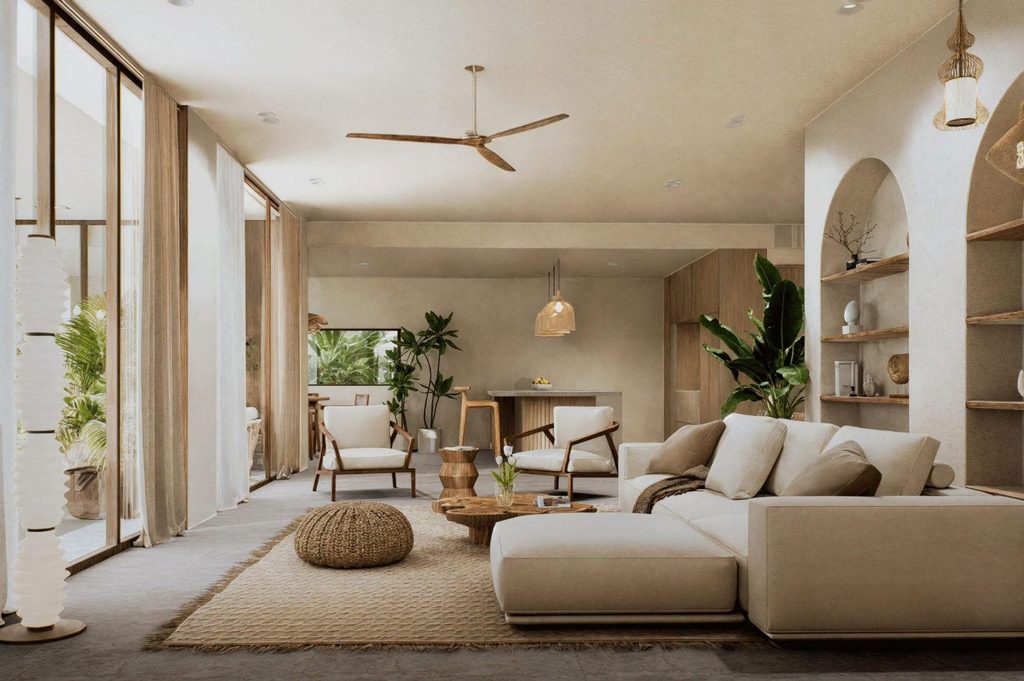
1. Choose Light and Natural Colors
Light colors help create a bright, airy atmosphere. Shades of white, cream, beige, soft grey, and warm sand work beautifully in tropical homes.
Design Tips:
- Use light-colored walls to make rooms feel more open.
- Combine beige or cream furniture with natural wood finishes.
- Add subtle green, terracotta, or earthy accents for visual interest.
- Avoid relying on dark colors across every large surface in small rooms.
2. Prioritize Natural Ventilation
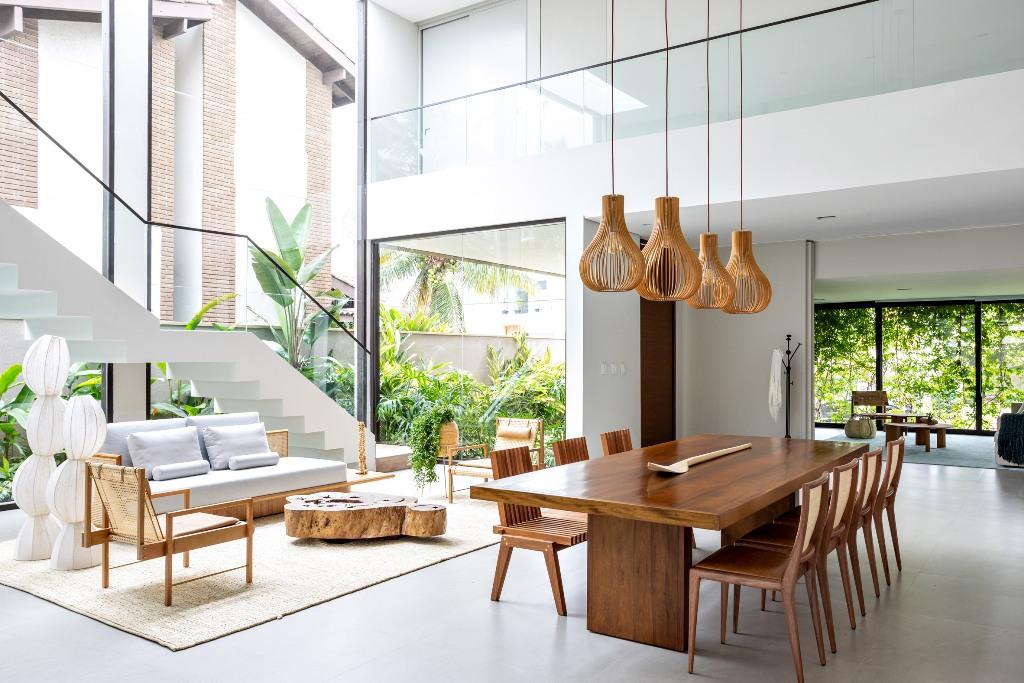
Good ventilation is essential in hot and humid environments. Properly positioned windows, ventilated openings, and thoughtfully planned room layouts can help improve airflow and indoor comfort.
Design Tips:
- Plan openings on opposite sides of a room where possible.
- Keep pathways between windows and living areas unobstructed.
- Use ventilated doors or partitions where privacy permits.
- Combine ventilation with ceiling fans and appropriate cooling systems.
In Bangladesh, also consider outdoor humidity, rain direction, insects, and security when planning windows and openings.
3. Select Moisture-Resistant Materials
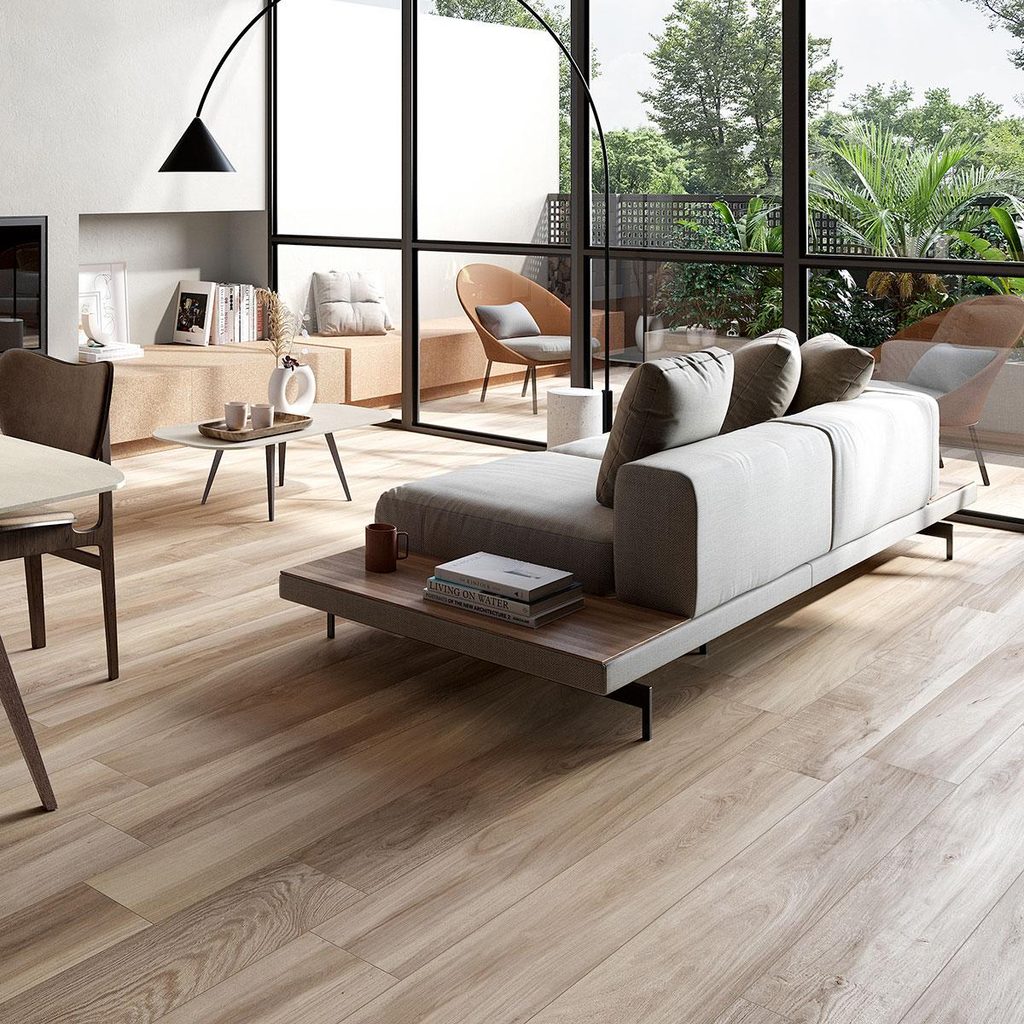
Humidity can damage unsuitable materials, causing swelling, peeling, corrosion, or mold. Choosing materials suited to the environment helps preserve the beauty and durability of an interior.
Recommended Materials:
- Flooring: Porcelain tiles, ceramic tiles, and suitable stone.
- Kitchen cabinets: Moisture-resistant plywood with appropriate finishes or suitable compact laminates.
- Bathroom surfaces: Porcelain tiles and water-resistant finishes.
- Furniture: Properly sealed wood, corrosion-resistant metal, and quality engineered materials.
- Wall finishes: Washable paint suitable for humid interiors.
Material selection should be supported by proper waterproofing, ventilation, and installation. No material is completely moisture-proof in every condition.
4. Use Natural Materials for a Tropical Feel
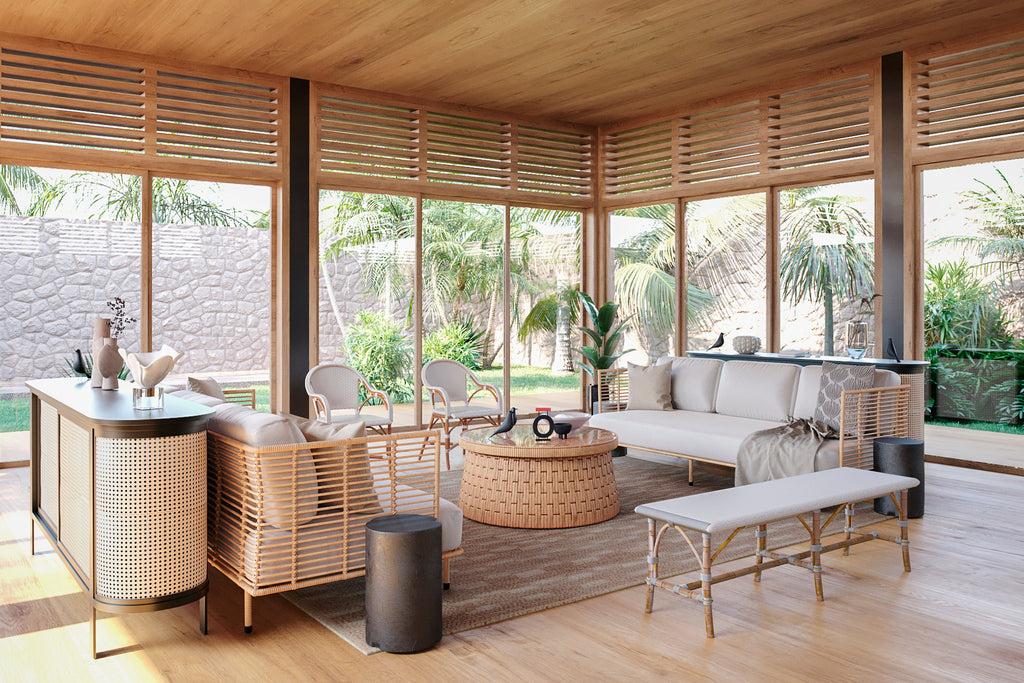
Wood, bamboo, rattan, stone, and woven textures bring warmth and character to tropical interiors. They also create a connection between indoor spaces and nature.
Design Tips:
- Choose properly dried and treated wood.
- Use rattan in accent chairs, pendant lights, or decorative panels.
- Introduce stone textures through countertops or feature walls.
- Balance natural textures with smooth, easy-to-clean surfaces.
For humid homes, natural materials need suitable treatment and maintenance to resist moisture and pests.
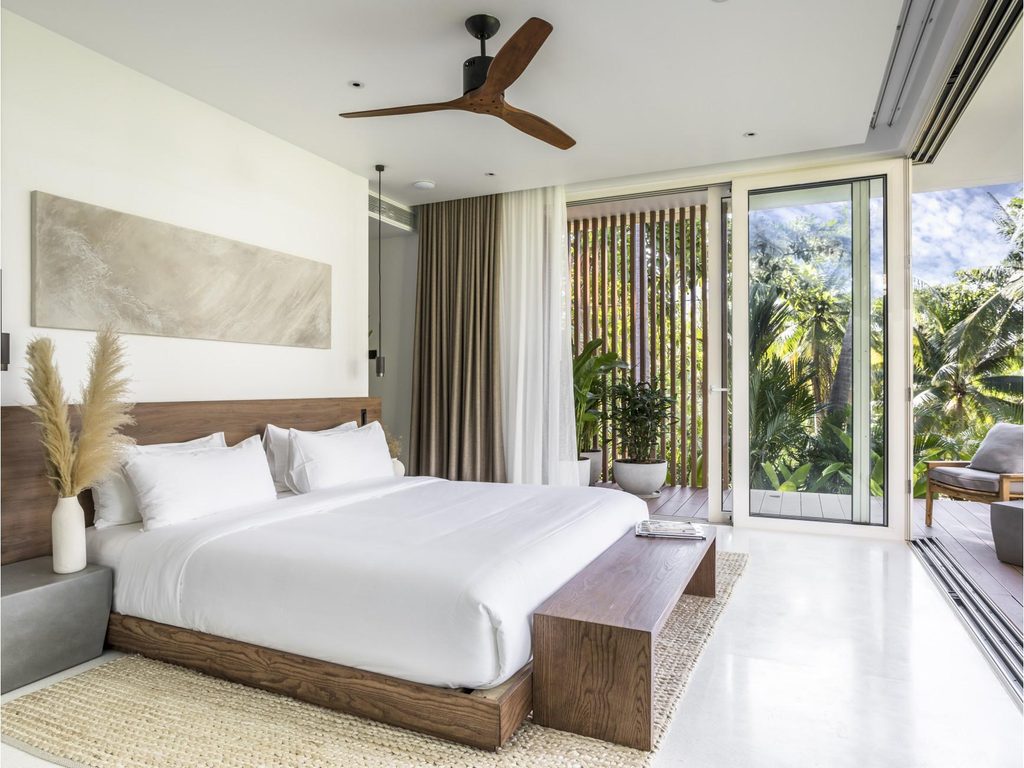
5. Create a Cool and Comfortable Bedroom
A comfortable bedroom should feel calm, uncluttered, and easy to maintain. The right fabric, furniture layout, and lighting can make the room more inviting.
Design Tips:
- Use breathable cotton bedding and washable textiles.
- Choose light curtains or layered window treatments.
- Maintain clear circulation around the bed.
- Install a ceiling fan where appropriate.
- Avoid thick textiles that remain damp in poorly ventilated rooms.
6. Control Sunlight and Indoor Heat
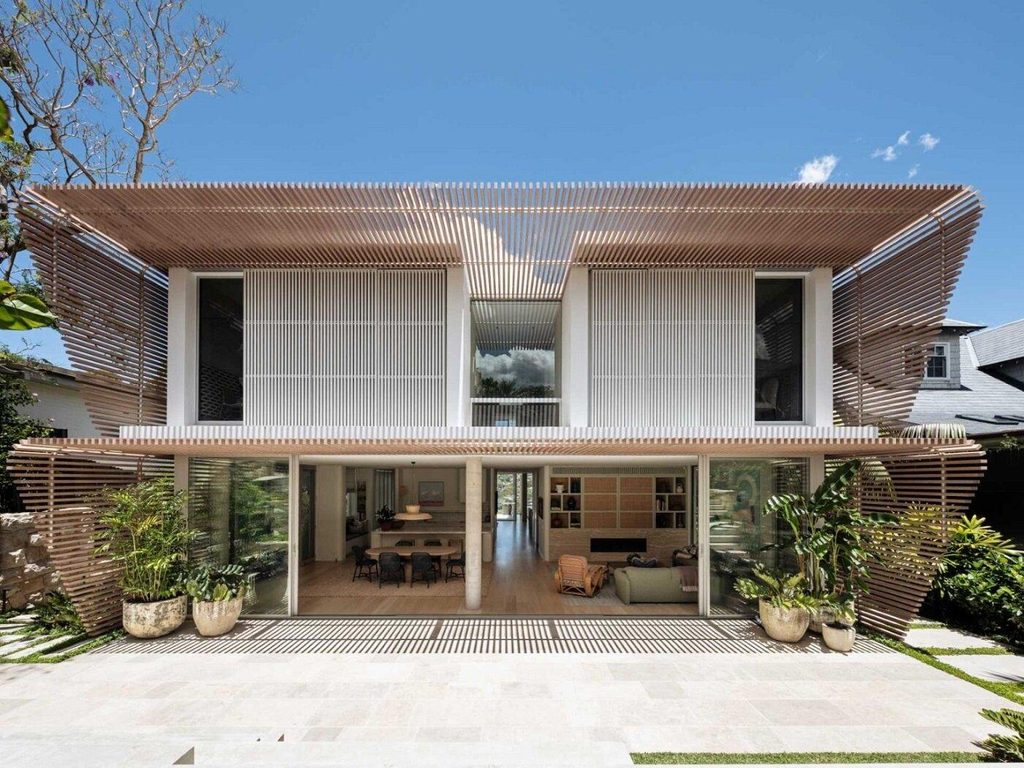
Large windows can make a home beautiful, but direct sunlight can increase indoor heat. Smart shading helps balance daylight with comfort.
Design Tips:
- Use sheer curtains combined with blackout curtains where needed.
- Install external shading, overhangs, or louvers.
- Choose blinds suited to each room’s exposure.
- Consider heat-reducing window treatments where practical.
- Use light-colored window coverings that complement the interior palette.
External shading is particularly useful because it can block sunlight before it heats the glass and enters the room.
7. Add Indoor Plants Thoughtfully
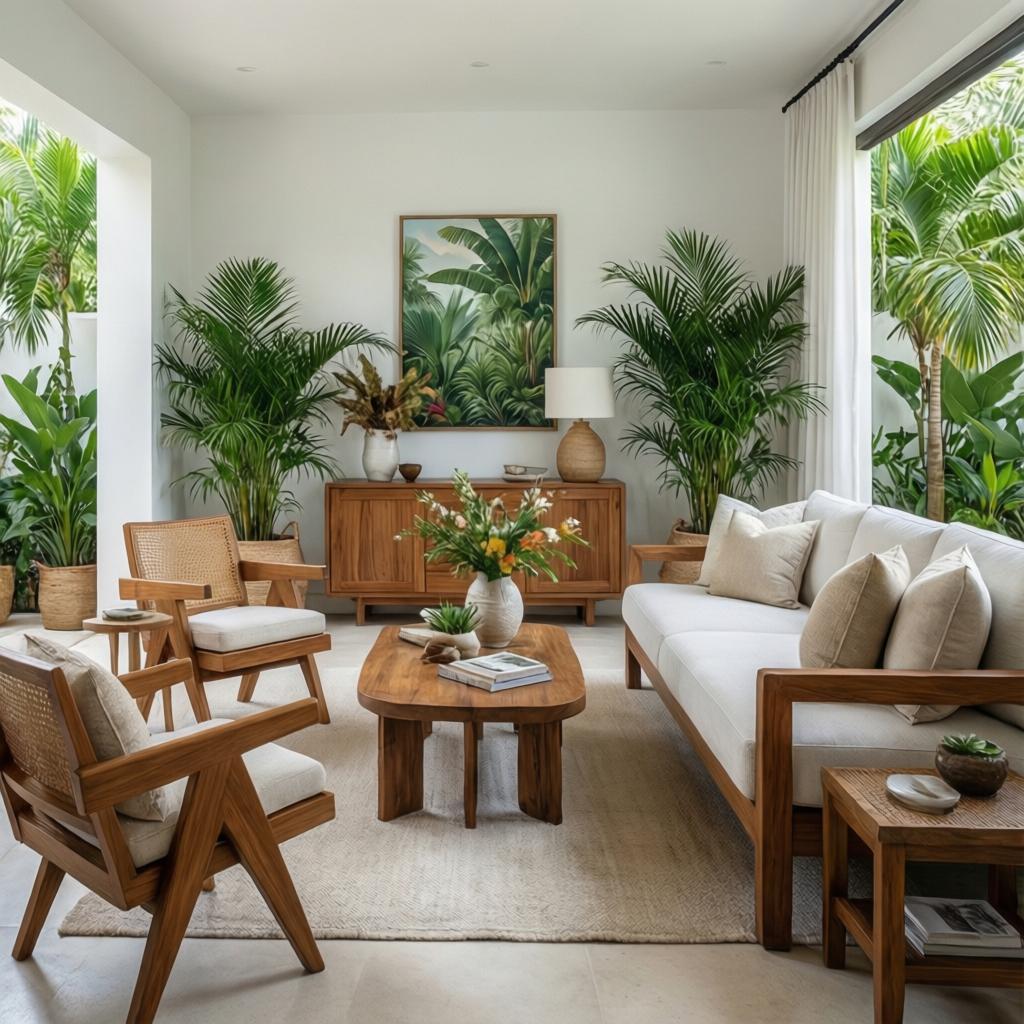
Indoor plants add color, softness, and a natural atmosphere. A few well-placed plants can make an interior feel more connected to the outdoors without overcrowding the room.
Design Tips:
- Choose plants suited to your home’s natural light and care conditions.
- Use pots with proper drainage.
- Avoid allowing water to collect around plant containers.
- Place plants in empty corners or beside furniture to create visual interest.
A single statement plant beside a sofa or in an empty corner can often look more refined than filling every available space with greenery.
8. Choose Furniture That Feels Light and Functional
In tropical homes, furniture should support comfort, airflow, and easy maintenance.
Design Tips:
- Prefer furniture with practical proportions and clear space around it.
- Choose washable upholstery and durable finishes.
- Use raised furniture where suitable to make cleaning easier.
- Avoid overcrowding small rooms with bulky pieces.
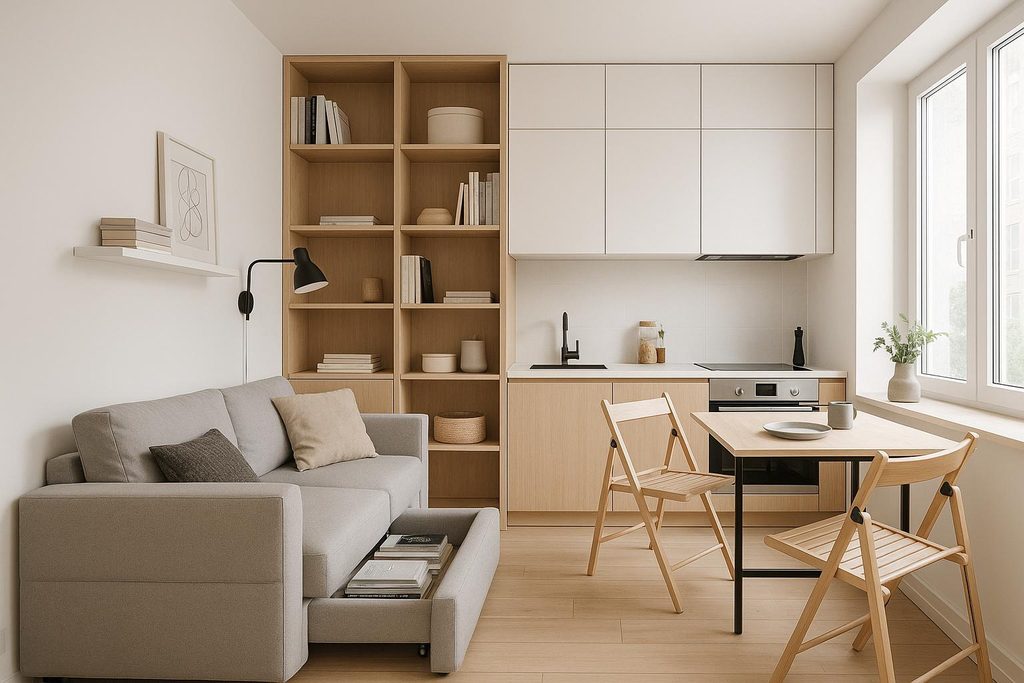
- Include built-in storage to keep everyday spaces organized.
A well-planned layout can make even a compact apartment feel more spacious and comfortable.
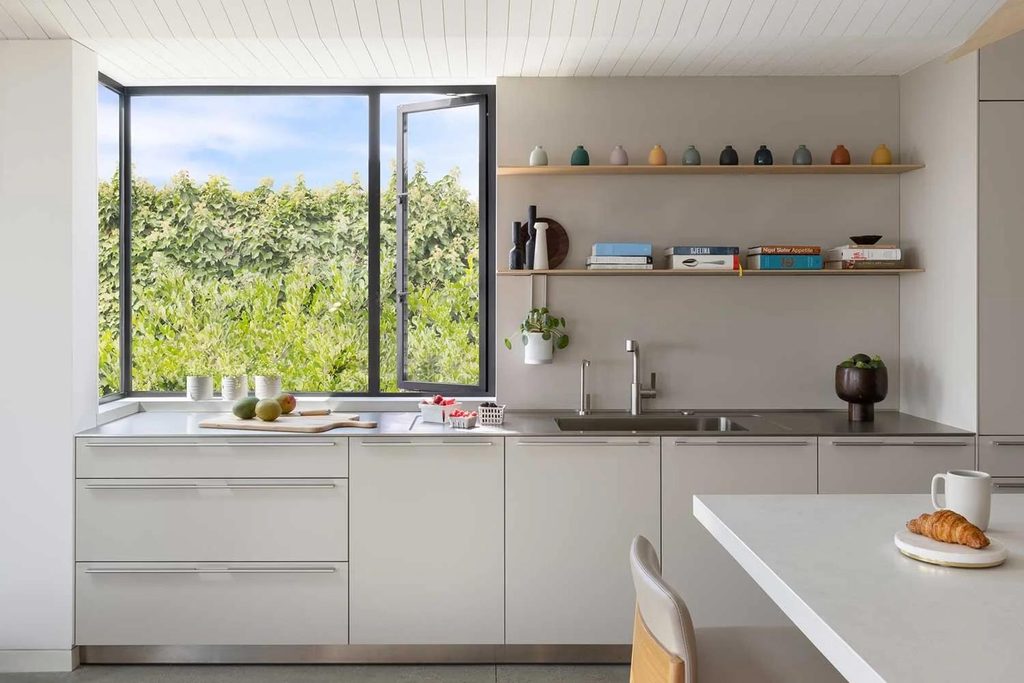
9. Design a Practical, Humidity-Aware Kitchen
Kitchens generate heat, steam, and moisture, making ventilation and material durability especially important.
Design Tips:
- Use an appropriately vented cooking hood.
- Choose easy-to-clean backsplashes.
- Install durable countertops and moisture-resistant cabinet finishes.
- Keep moisture-producing areas well ventilated.
- Repair leaks promptly to prevent long-term damage.
10. Use Layered Lighting for a Fresh, Modern Look
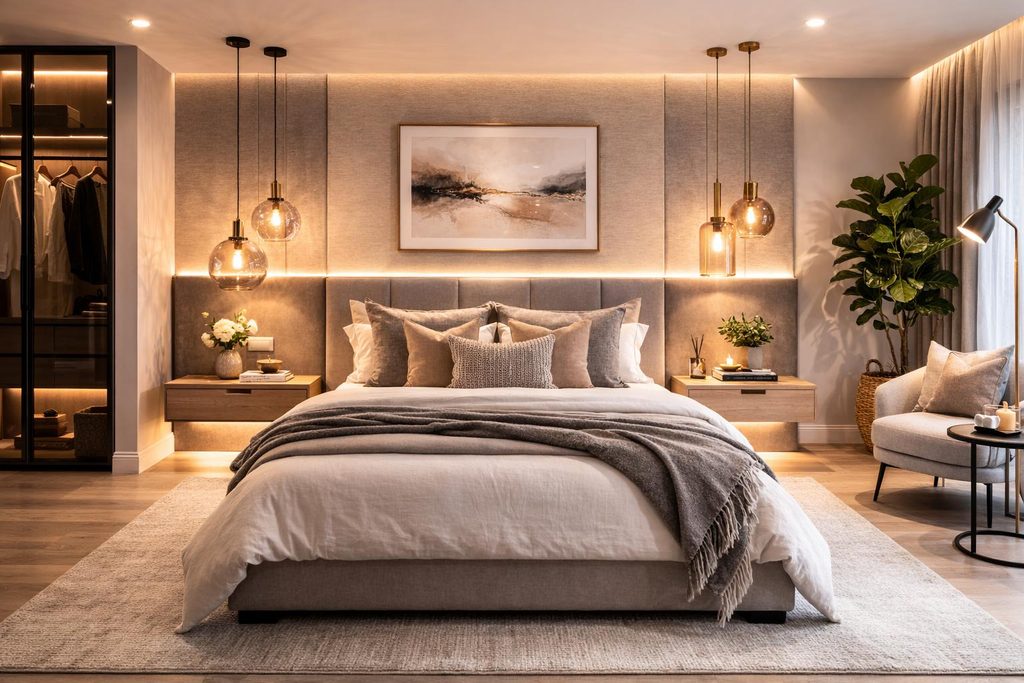
Good lighting enhances the appearance of materials and colors while making rooms more functional.
Design Tips:
- Maximize useful daylight without excessive solar heat.
- Use ambient lighting for general illumination.
- Add task lighting in kitchens, work areas, and reading corners.
- Use accent lighting to highlight textures and architectural details.
- Choose energy-efficient LED fixtures.
Lighting should complement the room’s natural light and create a comfortable atmosphere throughout the day.
The best interior design for hot and humid climates balances beauty, comfort, durability, and smart planning. By choosing light colors, moisture-resistant materials, natural textures, effective ventilation, appropriate sun protection, and functional furniture, homeowners can create interiors that remain attractive and practical throughout the year.
For Bangladesh, these ideas are especially relevant because interiors must respond to hot summers, monsoon humidity, and seasonal rainfall while reflecting local lifestyles and modern design preferences.
A beautiful interior is not just about appearance — it is about creating a healthier, more comfortable, and more functional everyday living experience.
